

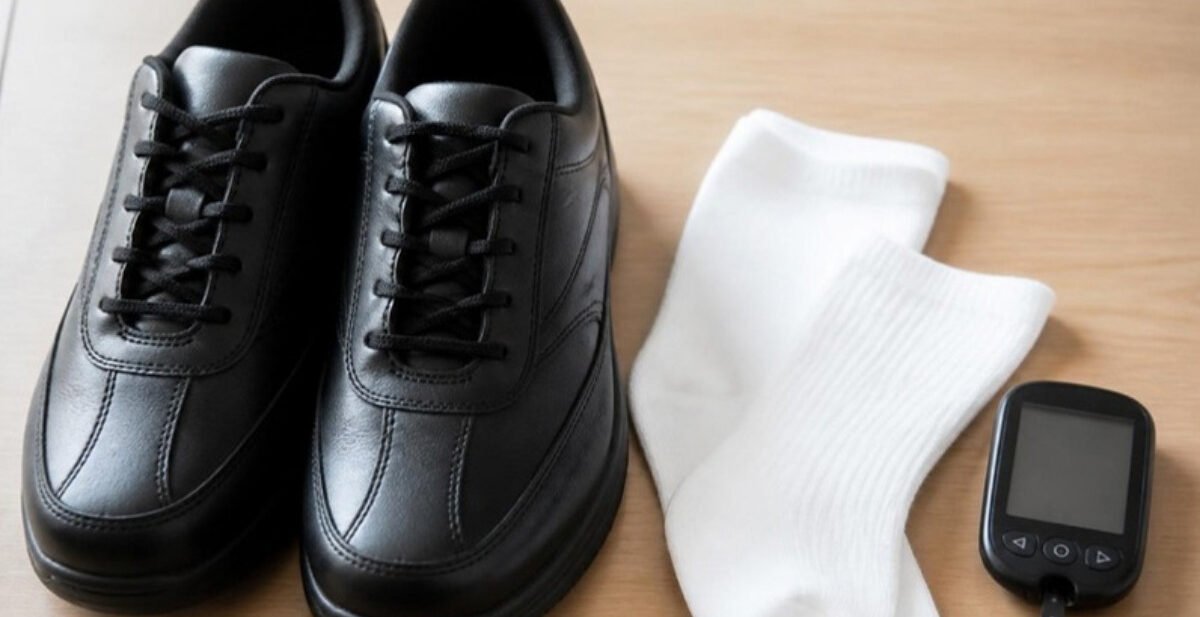
High sugar can reduce feeling in the feet and slow healing, so small wounds can turn serious.
Daily habits
- Check both feet every day, including between the toes
- Wear well-fitting footwear and clean cotton socks
- Never walk barefoot, even at home
- Keep skin clean and moisturised, not between the toes
- Do not cut corns or nails aggressively at home
See a doctor early if
- A wound does not heal within a week
- There is redness, swelling, warmth or discharge
- A toe or part of the foot changes colour
Early care can prevent serious complications. Keep blood sugar under control as advised by your doctor.
Why diabetic feet need special care
High blood sugar over time damages nerves and blood vessels. Nerve damage reduces feeling, so small cuts and blisters go unnoticed, while poor circulation slows healing. A minor wound can become a deep ulcer or infection, which is a leading reason for amputation in people with diabetes, and most of this is preventable.
Your daily foot check
- Look at the tops, soles, heels and between the toes every day, using a mirror if needed
- Check for cuts, blisters, redness, swelling, cracks or colour change
- Feel for warmth or new numbness
- Wash feet in lukewarm water, dry well between the toes and moisturise (not between the toes)
- Never walk barefoot, even at home
Footwear and nail care
Wear well-fitting, closed shoes with soft socks, and check inside shoes before wearing them. Cut nails straight across and do not remove corns or calluses with blades or chemical pads. See a doctor for ingrown nails.
When to see a surgeon at once
Any wound that does not heal in a few days, a blister that breaks, redness spreading up the foot, a bad smell, black skin or fever needs urgent attention. Dr. K. Praveen Reddy has special experience in diabetic foot management at Swastha Multispeciality Clinic, Vanasthalipuram. Keeping blood sugar in your target range is the most important protection.
Why diabetic feet need special care
High blood sugar damages nerves and blood vessels, so you may not feel a cut, blister or burn, and wounds heal slowly. Small injuries can turn into ulcers and infection.
Do’s and don’ts
- Wash feet daily in lukewarm water and dry between the toes
- Moisturise the skin but not between the toes
- Never walk barefoot, even at home
- Cut nails straight across; do not cut corns or calluses yourself
- Check shoes for stones or rough seams before wearing
When to see a surgeon
Any wound that does not heal in a few days, redness, swelling, warmth, a bad smell or black skin needs urgent attention. Dr. K. Praveen Reddy offers wound care, including VAC therapy for advanced wound care, to help diabetic wounds heal and protect your limb.
Frequently asked questions
Can I treat a foot wound at home?
Not if you have diabetes. Have it checked early.
This is general information and does not replace an examination. Consult Dr. K. Praveen Reddy at Swastha Multispeciality Clinic, Vaidehi Nagar, Vanasthalipuram.
Read more: Laparoscopic surgeon in Vanasthalipuram | Our doctors
Book a visit: Call or WhatsApp +91 83417 94993. Walk-ins welcome.
Learn more about our diabetic foot care in Vanasthalipuram, or call 83417 94993 to book a consultation.